 Get a Quote

 Send Inquiry
Bearing machine Fully Automatic Grinding Machine bearing make machine
Price 25000 USD ($)/ Piece
MOQ : 1 Piece
Bearing machine Fully Automatic Grinding Machine bearing make machine Specification
- Precision Rating
- P0, P6, P5, P4
- Thickness
- Up to 60 mm
- Load Capacity
- Up to 3 Tons (3000 kg)
- Retainer
- Steel / Brass / Polyamide Retainers Supported
- Structure
- Modular, Heavy-Duty Frame
- Lubrication Type
- Oil / Grease Lubrication Compatible
- Number Of Rows
- Single / Double Row Capability
- Seals Type
- Open / Sealed / Shielded Bearings
- Outer Diameter
- 25 mm to 200 mm
- Inner Diameter
- 10 mm to 120 mm
- Cage Material
- Steel / Brass / Polyamide
- Usage
- Industrial
- Material
- Mild Steel
- Use
- Fully Automatic Grinding and Finishing of Bearing Components
- Bearing Type
- All Standard Rolling Bearings (Deep Groove, Tapered, Spherical, etc.)
- Product Type
- Grinding Machine
- Bore Size
- Customizable as per Requirement
- Warranty
- 2 Year
- Color
- Blue & White
- Grinding Wheel Size
- 350 mm Diameter
- Control System
- Touchscreen HMI, Programmable Parameters
- Noise Level
- 78 dB
- Automation Level
- Fully Automatic with PLC Control
- Air Requirement
- 6 Bar (if pneumatic systems present)
- Coolant System
- Built-in Recirculating Coolant System
- Safety Features
- Emergency Stop, Safety Guards, Overload Protection
- Production Capacity
- Up to 500 Pieces per Hour
- Operator Interface
- Color LCD Touch Panel, Multilingual Support
- Spindle Speed
- Up to 3500 RPM
- Power Requirement
- 380V, 50Hz, 3 Phase, 12 kW
- Dimensions (LxWxH)
- 2200 mm x 1800 mm x 1650 mm
- Net Weight
- ~3400 kg
- Finish Quality
- Ra 0.18 m
- Feeding System
- Automatic Vibration Feeder
Bearing machine Fully Automatic Grinding Machine bearing make machine Trade Information
- Minimum Order Quantity
- 1 Piece
- Supply Ability
- 5 Pieces Per Month
- Delivery Time
- 10-15 Days
- Main Export Market(s)
- Asia, Australia, Central America, North America, South America, Eastern Europe, Western Europe, Middle East, Africa
- Main Domestic Market
- All India
About Bearing machine Fully Automatic Grinding Machine bearing make machine
Industry-specific attributes
Grinding Diameter(Outer)(mm)
120
Grinding Diameter(Inner)(mm)
10
Max. Length of Workpiece (mm)
220
Other attributes
Place of Origin
China
Weight (KG)
3000
Key Selling Points
Automatic
Warranty
1 Year
Showroom Location
None
Applicable Industries
Manufacturing Plant
Marketing Type
New Product 2020
Machinery Test Report
Provided
Video outgoing-inspection
Provided
Warranty of core components
3 months
Core Components
Motor, Bearing, Gearbox, Engine, Gear, Pressure vessel, Pump, PLC
Condition
New
CNC or Not
CNC
Grinding Length(mm)
150
Brand Name
CIXI HOTO
After-sales Service Provided
Engineers available to service machinery overseas
Precision, Performance, and Flexibility
Designed to deliver precise grinding for deep groove, tapered, spherical, and other standard rolling bearings, this fully automatic system supports a variety of diameters, thicknesses, and bearing materials. The programmable parameters allow manufacturers to quickly adjust workflows for new or custom orders, making it ideal for fast-paced industrial settings.
User-Friendly Automation and Safety
Advanced PLC control and a touchscreen interface offer intuitive programming, multilingual support, and full process monitoring. Integrated safety functions, including emergency stops, guards, and overload protection, ensure secure operation for your staff, minimizing risk and downtime during production cycles.
FAQ's of Bearing machine Fully Automatic Grinding Machine bearing make machine:
Q: How does the Fully Automatic Grinding Machine enhance production efficiency?
A: The machine streamlines production through programmable PLC control, automatic feeding, and high-speed operation, allowing up to 500 pieces per hour. Operators benefit from the touchscreen HMI and automatic vibration feeder, which reduce manual intervention and potential errors, resulting in consistent, high-quality output and higher throughput.Q: What types of bearings can be processed with this machine?
A: This grinding machine is engineered to handle all standard rolling bearing types, including deep groove, tapered, and spherical bearings. It supports single and double-row configurations, with inner diameters from 10 mm to 120 mm and outer diameters up to 200 mm, accommodating varied industrial requirements.Q: When is maintenance required, and what does the process involve?
A: Routine maintenance is typically scheduled based on operational hours and is guided by the machine's PLC system alerts. The process includes checking and cleaning the recirculating coolant system, inspecting the grinding wheel (350 mm), examining safety features, and lubricating moving parts, ensuring reliable long-term performance.Q: Where can this machine be installed, and what are the site requirements?
A: The machine is designed for use in industrial environments with ample space to accommodate its dimensions (2200 mm x 1800 mm x 1650 mm). It requires 380V, 50Hz, 3-phase electrical supply, an air supply of 6 bar for pneumatic systems, and proper ventilation. Its robust frame ensures steady operation on industrial flooring.Q: What benefits does the built-in recirculating coolant system provide during operation?
A: The integrated coolant system cools and cleans the work area, maintaining optimal temperatures during grinding. This reduces the risk of thermal damage to the bearings, extends grinding wheel life, and promotes consistently high surface finish (up to Ra 0.18 m), enhancing product quality overall.Q: How user-friendly is the operator interface?
A: Operators interact via a color LCD touchscreen with multilingual support, allowing for easy parameter adjustments and real-time monitoring. The system is designed for straightforward setup and quick training, making it accessible to operators with varying skill levels.
Tell us about your requirement

Price:
Quantity
Select Unit
- 50
- 100
- 200
- 250
- 500
- 1000+
Additional detail
Mobile number
Email

More Products in Bearing Grinding Machine Category
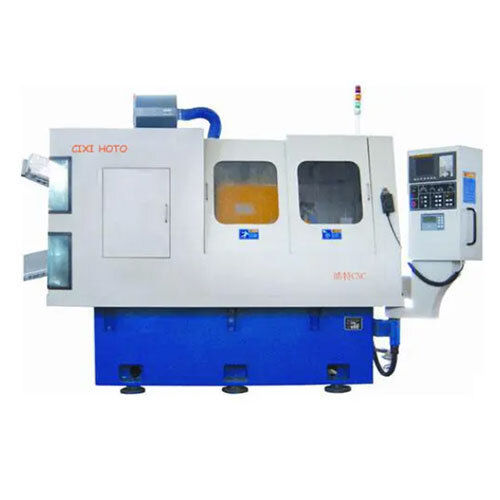
Bearing Machine CNC Machine Grinding Making Machine
Price 15000 USD ($) / Piece
Minimum Order Quantity : 1 Piece
Material : Mild Steel, Other
Usage : Industrial
Warranty : 2 Year
Product Type : Cnc Grinding Machine
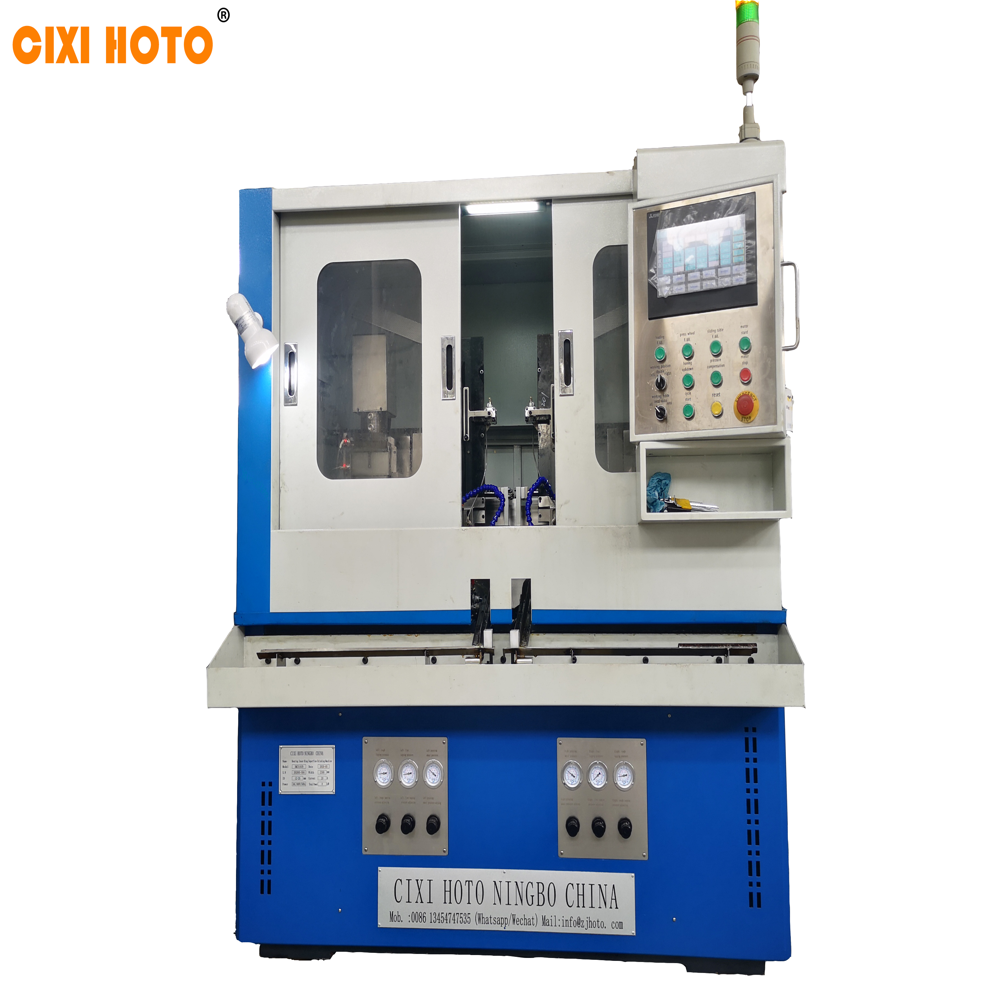
Bearing machine Fully Automatic Grinding Machine bearing make machine
Price 90000.0 INR / Set
Minimum Order Quantity : 1 Piece
Material : Other
Usage : creating topoftherange devices.
Warranty : 6 months
Product Type : bearing grinding machine

Contact Details

- No. 446, Xinxing 2 Rd, Hightech Industrial Area, CIXI,Ningbo - 315303, Zhejiang, China
- Email ID : info@zjhoto.com
WeChat :+8613454747535
Skype ID : louise9241

- Mrs Louise Wong (Exp. M.)
- Wayne D.
- info@zjhoto.com
 Send Inquiry

CIXI HOTO METALLIC PRODUCT CO. LTD
All Rights Reserved.(Terms of Use)
Developed and Managed by Infocom Network Private Limited.
Developed and Managed by Infocom Network Private Limited.
 English
 Spanish
 French
 German
 Italian
 Chinese (Simplified)
 Japanese
 Korean
 Arabic
 Portuguese